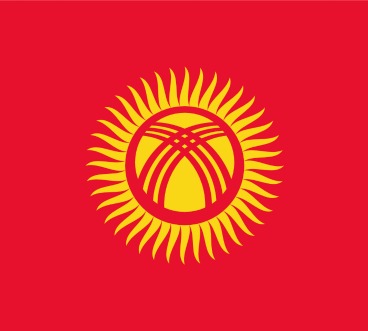
Mr. Speaker, as this Congress comes to a conclusion, I rise to make some remarks on the state of democratic development in Central Asia. I am inspired to do this by the very significant recent events in Kyrgyzstan, where last month, a new constitution was adopted that limits the power of the presidency and enhances the authority of the legislative branch.
The Kyrgyz should be congratulated for peacefully negotiating a delicate political situation that could have turned violent. The outcome resulted in the strengthening of Kyrgyzstan’s democracy at a time when its neighbors are moving in the opposite direction.
Throughout post-Soviet Central Asia – and all over the former USSR – the defining feature of political development has been the emergence of super-presidents, while parliaments and courts languish under executive control. As a result, the balance of powers, though constitutionally mandated, has remained a dead letter and corruption has become endemic.
But Kyrgyzstan has always differed from other regional states by virtue of its strong civil society and relatively combative legislature; former President Askar Akaev was never as powerful as his counterparts in Central Asia. Moreover, there is a well-established tradition of “people power” in Kyrgyzstan – Akaev was almost forced from office by a countrywide protest movement in 2002. He managed to keep his seat, however, until last year’s “Tulip Revolution” of 2005, which led to his ouster and his replacement in July by Kurmanbek Bakiev. By all accounts, the presidential election of July 2005 marked a real improvement in elections held in Kyrgyzstan, and particularly in Central Asia.
Since then, however, Kyrgyzstan has struggled with major problems, among them: uncontrolled criminality, high-level corruption, economic decline and a general sense of disappointment at unfulfilled promises. By this fall, discontent had risen to such a degree that a political movement, “For Reforms” led largely by President Bakiev’s former associates, was able to mobilize protesters to pursue their agenda by peaceful rallies. Though the demonstrators originally called for Bakiev’s resignation, in the end a compromise was reached in the form of a new constitution.
The document represents a real achievement, primarily for limiting the executive’s powers – a first in Central Asia. Bakiev will remain in office until 2010 but his successor will not appoint the government, Prosecutor-General, the head of the Central Election Commission and the holders of other important posts. Whichever political party gains 51 percent in elections has that responsibility – an incentive for traditionally fractious political parties to align themselves in coalitions and work together.
Naturally, the heads of neighboring states have been displeased. State-controlled media in those countries have portrayed these events in the worst possible light, emphasizing “chaos and anarchy,” and hoping thereby to discredit the Kyrgyz experiment by linking popular demonstrations with instability. But while crowds gathered in the streets of the capital Bishkek, the new constitution was adopted almost without violence, solidifying a tradition of politically effective peaceful protest. Most important, a framework has been created for developing all branches of power and resolving political disagreements.
I believe Kyrgyzstan’s experience has genuine significance for the possibility of democratization in Central Asia, simply because the Kyrgyz political class, cooperating with civil society, has shown that it is possible without bloodshed to reach compromise solutions to fundamental political problems. Whether Kyrgyzstan’s experience can or should work in other countries is a different issue. But it is clear that all post-Soviet states need to find a way to limit the power and authority of their presidents if they are to escape the trap into which they have fallen. When people feel they have no representation or possibility of addressing grievances through state institutions, they will be tempted to find other methods. If this happens in other, more repressive countries with few or no democratic traditions, the outcome may not be so peaceful or positive.
So far, there is little evidence that this realization has penetrated elsewhere in Central Asia, where presidents continue to jealously hoard power. Saparmurat Niyazov remains the all-powerful “Turkmenbashy,” or leader of all Turkmen, whom he continues to subject to his capricious campaigns, while running a permanent purge of the political class and making sure Turkmenistan remains the only one-party state to survive the Soviet bloc. Uzbekistan’s Islam Karimov, who allows no opposition, has cracked down even harder and cuddled up to Russia since the international community reacted with outrage to the slaughter of hundreds in Andijan in May 2005. Tajikistan’s Imomali Rakhmonov won re-election last month; constitutional amendments adopted last year will potentially allow him to remain in office until 2020. And Kazakhstan’s bid to chair the OSCE in 2009 has been resisted by the United States and the United Kingdom for failure to improve its poor human rights record.
What happened in Bishkek is quite noteworthy, especially for the region – opposition groups were allowed to protest, the government did not respond with violence, and both sides agreed to a new constitution that actually decreases presidential powers and introduces a parliamentary system. Nothing like this is happening for thousands of miles in any direction.
All in all, Mr. Speaker, 15 years after the collapse of the USSR and the emergence of new states, it is hard to summon up much optimism for the prospects democracy. Still, Kyrgyzstan has given me a bit of hope.