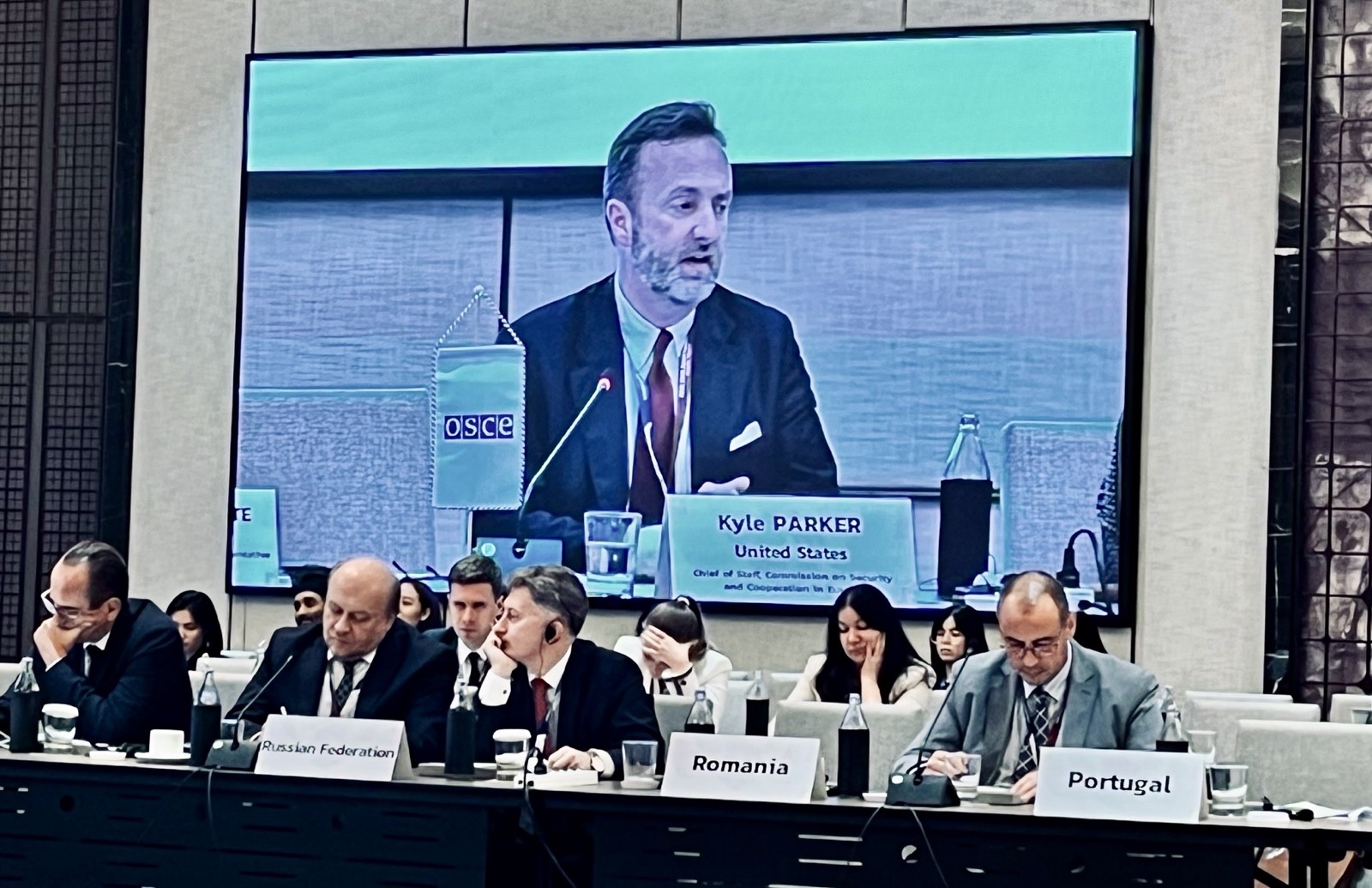
Thank you, it’s great to be here in Bangkok for the first time and I appreciate the warm welcome our Thai hosts have extended. I’ve spent my career on Europe and transatlantic relations so it’s a rare treat for me to visit East Asia.
The last time I was in the region was for the 2019 Asian Partners conference in Tokyo just six months before the pandemic grounded us all for a few years. That experience of being forced by circumstances even deeper into the digital realm reaffirmed my belief that many of the answers to the questions we’re discussing today lie in the preservation and renewal of genuine encounters with one another in the physical world. So, despite the exhaustion of travelling here from Washington, it’s worth it to have the privilege of sharing my perspective—in person—with you.
First, let me thank the Finnish chair of the OSCE’s Asian Partners Group for its stewardship of the OSCE during the 50th anniversary of the process named after Finland’s capital. Last week, at a ceremony in Washington, Freedom House—a leading NGO tracking democratic trends around the world—recognized Finland as the world’s freest country. I’m convinced it’s no accident that Finland is also recognized as having one of the world’s most capable militaries. Finland shows us all that an approach to national security grounded in respect for fundamental freedoms need not be balanced against so-called realist national interests. In fact, a tenacious commitment to fundamental freedoms is the ultimate source of societal resilience. It cultivates a commitment to a way of life that makes society a hard target for adversaries. Just consult the history books on the Winter War when the Soviets attacked Finland in 1939 a few months after conspiring with Nazi Germany in the Molotov-Ribbentrop Pact to start the Second World War. The Red Army performed so poorly against its former colony that Hitler was emboldened in his plans to later attack the USSR.
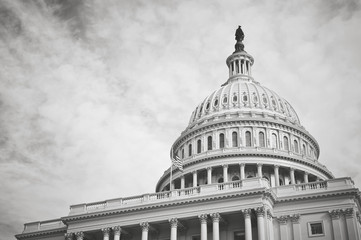
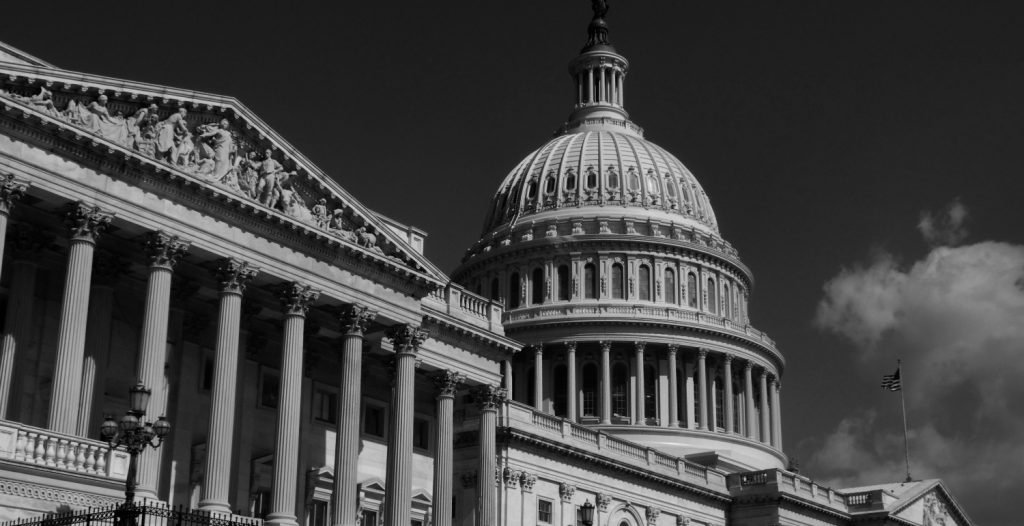
For those that don’t know, the U.S. Helsinki Commission is an independent congressional commission created in 1976 by Congress to monitor the implementation of Helsinki commitments. We’re without peer in the OSCE region and are an expression of the seriousness that the American people place on the moral dimension of foreign affairs. Since Russia’s full-scale invasion of Ukraine in 2022, we’ve directed our efforts to supporting Ukraine and opposing Russia’s violations of Helsinki commitments. We do so because of the moral imperative to aid the victim and confront the aggressor but also because the durability of these commitments, which include respect for national sovereignty and the territorial integrity of States, is a hard security priority.
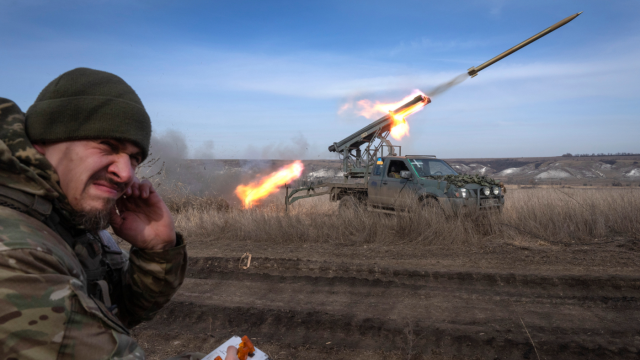
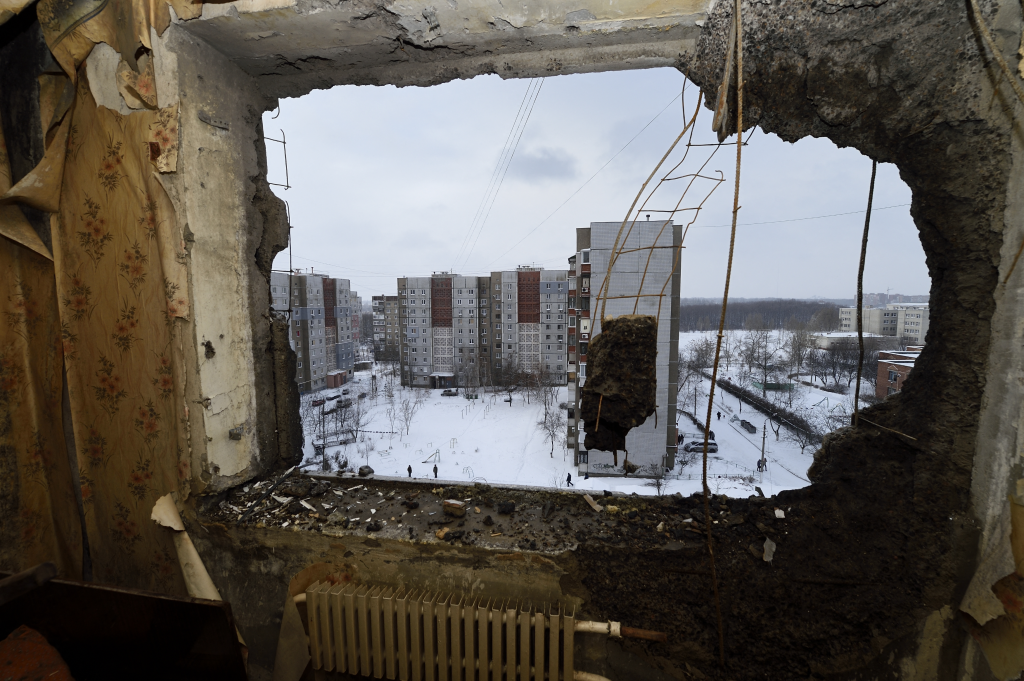
As this war drags on, we see how cheap, consumer-grade technologies are having an outsized effect on the battlefield. Ukraine exercises effective sea denial in the Black Sea without a navy. It has naval drones that down fighter aircraft, drones that drop mines from the sky, and drones that deliver needed aid and moral support to those stranded in the red zone awaiting rescue. The tanks and artillery that dominated the fight in the early years have been displaced by Chinese hobby drones flown with little more than a tethered fishing line making them unjammable. What a couple years ago were mere toys are now responsible for most of the casualties in the deadliest war of this century. And we are increasingly seeing artificial intelligence augment an automated kill chain. It’s not just a shortage of resources that spurs this turn toward cheaper systems. The pace of innovation demands it since what is cutting edge today quickly becomes obsolete.
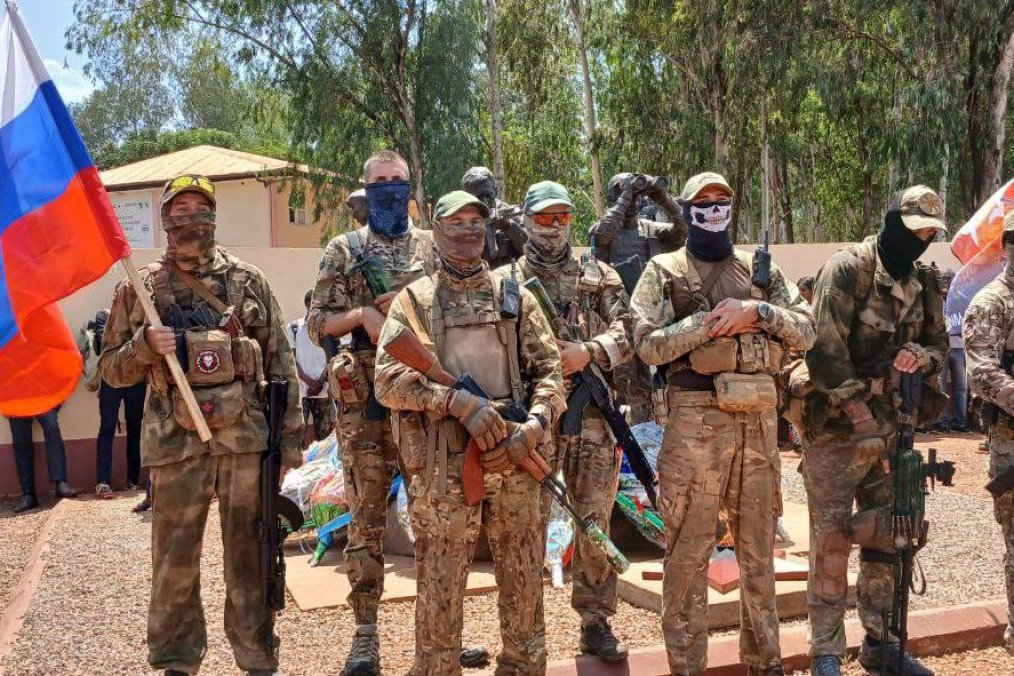
This new way of war is waged by both sides and the lessons learned are available to anyone willing to travel to Ukraine. This includes not just those who want to help Ukraine from good intentions, but also non-state actors who seek to bring these new capabilities back to conflicts in their home countries as we’ve seen in South America, Africa, the Middle East, and even here in East Asia. Ukraine has shown the world that the barrier of entry to an effective defense against a larger foe is much lower than many expected.
Russia’s prosecution of this war also includes polluting the media space in countries allied with Ukraine. Where the Soviet Union once sought to convince, Russia now seeks to confuse public opinion about the reality of its genocidal war by attacking the notion that the truth can even be known. These efforts have real battlefield effects when they lead to reduced support of Ukraine by allies and demoralize its defenders. New technology like AI automates much of this process even as it complicates attribution and verification. And the media literacy needed to defeat these tactics becomes harder to instill as increasing reliance on AI atrophies critical thinking skills even as it eliminates incentives to pursue the liberal education needed to discern signal from noise in a discordant information space.
Since this panel addresses parts of the First Dimension, I wanted to mention the technical and hybrid dimensions of the fight, but, in my view, Ukraine’s robust civil society is its center of gravity and the driving force behind its resilience and effective defense, and I’ll focus the remainder of my remarks on the hard power manifestations of this underestimated strength.
In the wake of the catastrophe of February 24, 2022, Ukrainians showed the world the hard power of a confident civil society willing to fight. This society wasn’t organized NGOs, but friends and neighbors who knew each other and made critical decisions in the early hours of the invasion that helped save millions from approaching hostilities and impending occupation. One of these Ukrainians was a 21-year-old mechanic. I met him in Mykolaiv in October 2022. He told me that as Russian forces advanced on his city, he retrieved his father’s hunting rifle and coordinated with friends who sourced similar makeshift arms. They staked out the high ground and stopped the advance of a column of Russian forces in light armored vehicles. By the end of the day, these citizens captured the more capable arms of the Russian forces they defeated—and they kept their city free. Spontaneous efforts like these in Mykolaiv, Chernihiv, and Sumy helped stop Russian advances on larger cities like Odesa, Kyiv, and Kharkiv. They also remind us that committed citizens on their own turf are a powerful equalizer against a larger foe.
As Ukrainians fight for each other and for their right to exist as a free people, their valor will determine whether our fraying international order will be mended or left to unravel. They are not fighting for a world where corruption, heavy handed government, and crimes like the human trafficking and scam centers we’re discussing on this panel never happen. But they are fighting for a world where these infringements on human freedom have consequences and where government is corrected by the active participation of citizens in the political process. And they mean business as we saw last summer when they took to the streets under Russian bombardment to defend the independence of their anticorruption agencies against their own government. And they won.
As States grapple with the policy challenges posed by the hybrid tactics of adversaries attacking below the threshold of conventional war, they’d do well to recall the example the Finns and the Ukrainians have given us—namely, that democratic openness, accountability, and respect for human rights makes them harder targets. Proponents of sacrificing the principles they extolled when times were good often rationalize their shortsightedness as hard-nosed realism. But recent history is littered with examples showing that an unprincipled approach is generally ineffective. Ineffective at solving the original problem, and ineffective at producing the prosperity and way of life that citizens will readily defend.
I suppose it would not just be impolitic but also a fire hazard to conclude by raising a Molotov Cocktail to toast the late Soviet Foreign Minister Vyacheslav Molotov for his proposal in 1954 that ultimately led to the creation of the OSCE, the richest body of human rights commitments in the world, and the clearest understanding of the link between hard security and the normative dimension so forcefully enunciated in the 1991 Moscow Document which states that,
“The participating States emphasize that issues relating to human rights, fundamental freedoms, democracy and the rule of law are of international concern, as respect for these rights and freedoms constitutes one of the foundations of the international order. They categorically and irrevocably declare that the commitments undertaken in the field of the human dimension of the CSCE are matters of direct and legitimate concern to all participating States and do not belong exclusively to the international affairs of the State concerned.”
###