The Rule of Law: Justice for the Bytyqi Brothers
Tuesday, September 19, 2017, 4:00 am
Image
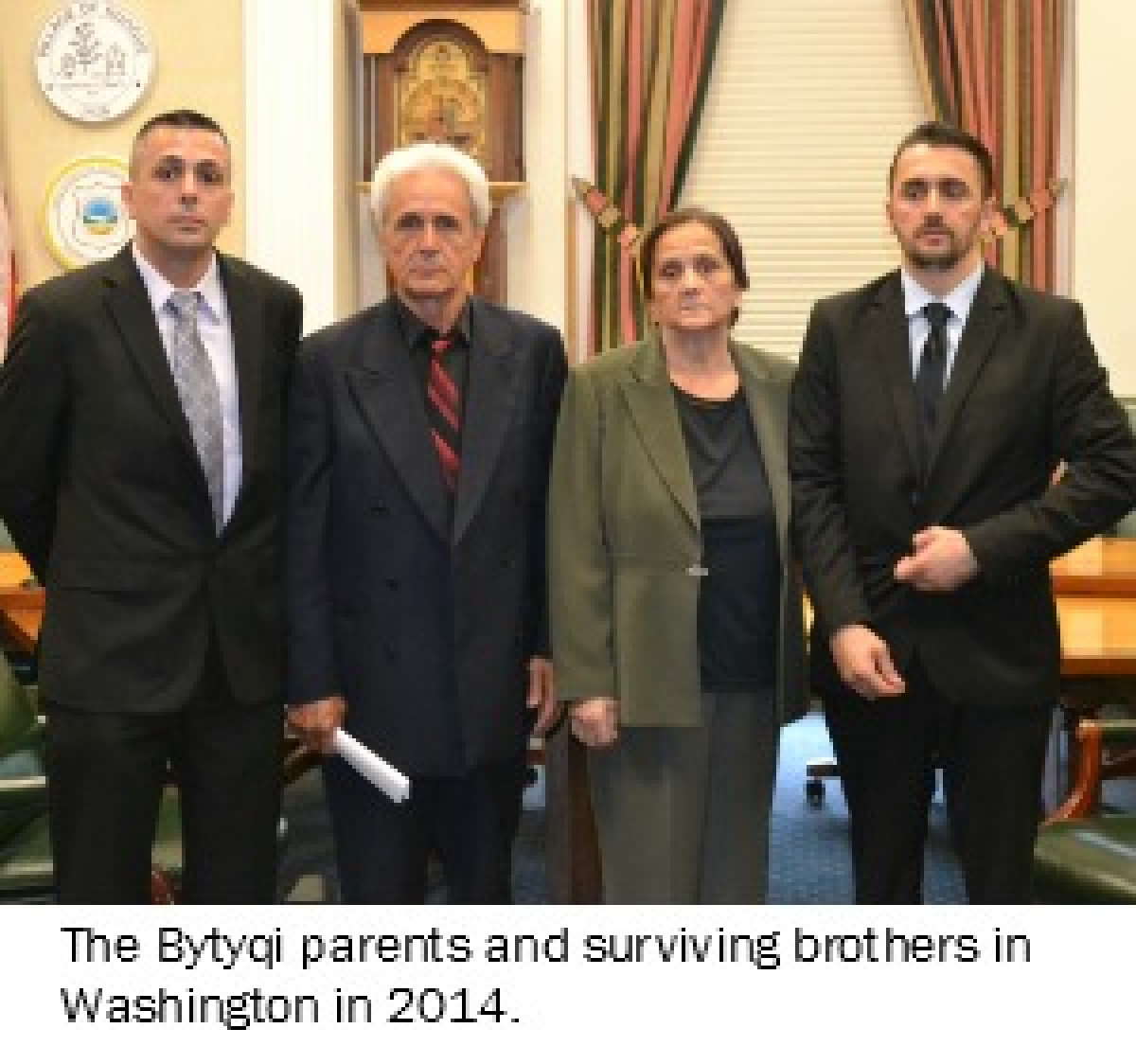
By Robert Hand, Policy Advisor
From September 11 to September 22, 2017, the OSCE participating States meet in Warsaw, Poland, for the Human Dimension Implementation Meeting (HDIM). The HDIM is Europe's largest annual human rights event. Over the course of two weeks, the 57 participating States will discuss compliance with consensus-based commitments on full range of fundamental freedoms, democracy, tolerance and nondiscrimination, and humanitarian concerns. OSCE commitments recognize that adherence to the rule of law is essential to democratic governance and to ensuring respect for human rights and fundamental freedoms. They also emphasize the importance of providing justice in cases of criminal acts which egregiously violate human rights and fundamental freedoms. Justice not only punishes the perpetrator of the crime; it also brings closure to the victim or surviving family and friends, and it allows the society in which it took place to move forward.The Murder of the Bytyqi Brothers
Ylli, Agron, and Mehmet Bytyqi were all United States citizens, born near Chicago, Illinois, to ethnic Albanian parents from Kosovo. (Previously an autonomous province of Serbia within the former Yugoslavia, Kosovo has been an independent state since 2008.) The three brothers, all in their 20s, responded to the brutality of the 1999 Kosovo conflict by joining the so-called "Atlantic Brigade" of the Kosovo Liberation Army. Hostilities ceased in June of that year, following a NATO air campaign designed to stop Serbian forces from repressing the local population and committing atrocities. About two weeks later, the Bytyqi brothers agreed to escort an ethnic Romani family, who had been neighbors of the Bytyqi family in Kosovo, to a place of greater safety. Dressed in plain clothes and unarmed, the brothers accidently strayed across an unmarked administrative border and were arrested by the Serbian police. They were jailed for two weeks for illegally entering the country. Rather than being released, Ylli, Agron, and Mehmet Bytyqi were instead placed in the custody of a special operations unit of the Serbian Ministry of Internal Affairs and taken to a training facility where all three were murdered. Two years later, their bodies were found with hands bound and gunshot wounds to the back of their heads, buried atop an earlier mass grave of approximately 70 murdered Kosovo civilians.Justice Denied
While an investigation reportedly continues, no individual has been found guilty – or even charged – for the murder of the Bytyqi brothers. Senior U.S. officials and Members of Congress, including several serving on the Helsinki Commission, repeatedly have urged that action be taken by Serbian authorities, including war crimes prosecutors in regard to this case; a resolution to that effect is pending in the U.S. House of Representatives.
Image
Media contact
Email csce.press@mail.house.gov
Phone (202) 225-1901
Relevant Countries